
A Letter on the Status of Recreational Soccer in NYC
NYC Has a Soccer Problem — and the World Cup Can't Fix It Alone
Hi Footy Friend,
I certainly don't expect you to prioritize this letter over the many other important matters in your life. But if your recreational soccer experience is important to you, please take the time to give it a read (as it is a lengthy update) or drop it into CGPT or Claude and prompt an appropriate summary.
It is worth noting, that though we've done our best to shield the below burden from you, it remains the most important we're faced with as a community and this fight belongs to all of us.
Having written and rewritten a draft to you numerous times over the past 18 months, it's finally time to hit send. I hope that together with you and the collective energy of this great community, we can finally make change happen.
Here's the gist:
With the World Cup coming to New York City, we have a rare opportunity not just to celebrate the game, but to force a long-overdue conversation about why access to soccer remains so difficult in one of the world’s great soccer cities.
We might be the largest participation league in this city. We may have leagues all over the boroughs (we'll get there soon, Staten Island). But the truth is that we can't accommodate the vast majority of our community in any given season and we're one of many community organizers sharing in this struggle.
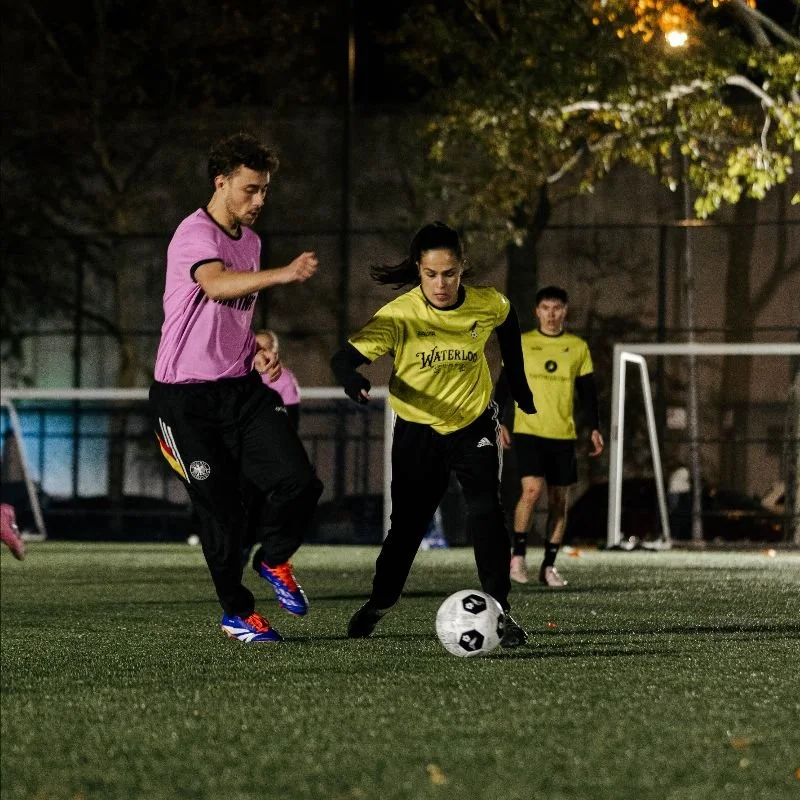
Just breaking up the text a bit with a photo of Chelsea Park (a field that may soon lose its lights).
The Lack of Field Accessibility Leaves You and Tens of Thousands On The Sidelines
When we talk about accessibility, we are really talking about two separate but connected issues: field lighting and permitting.
First, the city has dramatically underinvested in field lighting. The consequence is simple: when the sun goes down, the game stops. For working adults, families, and anyone who cannot be on a field in the middle of the day, that is not a minor inconvenience. It is a direct barrier to building healthy physical, mental, and social routines through sport.
To be clear, we are not asking for more fields. New York already has fields. We are asking for the ability to actually use them. By way of example, there is not a single Parks field with lights between Chinatown and Harlem on the east side of Manhattan (and only 1 on the west side).
Second, the permitting system is outdated and no longer reflects how New Yorkers use public space. The most widely accessible fields are designated as multi-purpose, but in spring and summer, those fields are prioritized for baseball and softball. Soccer’s priority window is fall and winter, when reduced daylight and weather sharply cut into usable hours. That framework may make sense for youth sports tied to school calendars, but it does not reflect adult demand.
And demand matters. By the Parks Department’s own admission, soccer demand in this city is as much as seven times greater than baseball and softball. It's the most popular sport by far at both the youth and adult levels. Yet the rules and infrastructure still do not reflect that reality, nor has there been a public discussion to work towards a resolution.
To help illustrate this, just today (you can't make this timing up), The NY Times released this article on NYC's "Soccer Desert" based on this State of Soccer in NY and NJ report from Aspen Institute.
Institutional Challenges Facing the Parks Department
I want to be fair here, because it really does matter.
The Parks Department has a difficult job. It manages an enormous portfolio of public space with real constraints, competing demands, and limited resources (not the least of which is a far-too-skinny budget). And after working with parks departments in multiple cities, I can say that New York’s is more functional than most.
Our frustration has more to do with a system that has shown an inability to evolve, even when presented with practical opportunities that would help everyone (and in some cases, immediately).
What we have seen over and over again is not thoughtful engagement with solutions, but missed opportunities, decisions made in a vacuum, bureaucratic drift, and an unwillingness to treat community-building organizations as true partners (more on this towards the end).
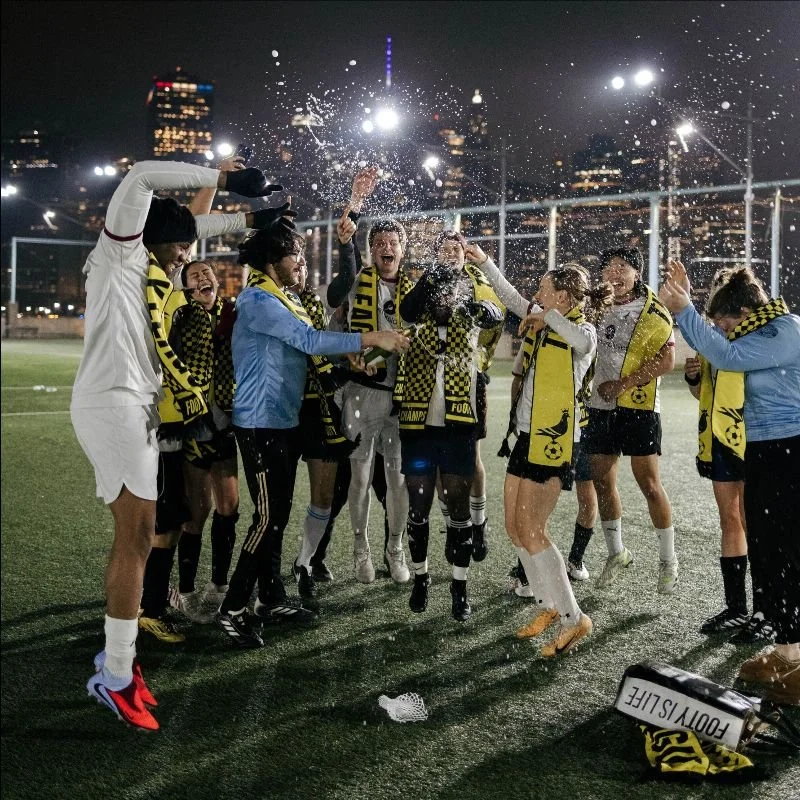
Another break in text for you. This time, a field with lights that has given so many New Yorkers the best possible soccer memories for nearly 15 years!
For fifteen years, we have built community in New York City parks.
We have helped tens of thousands of New Yorkers get outside, be active, meet people, and create routines around sport. We have been one of the city’s largest permit holders for years. We represent roughly 60,000 New Yorkers who use NYC Parks for recreational soccer.
And in all that time, not once has Parks Department leadership reached out to ask how they can better support the communities we are building, how we might partner more effectively, or what they, in partnership with us, can do to better serve the New Yorkers who rely on these fields.
Not once.
That is worth sitting with.
Because over those same fifteen years, we have not simply complained. We have repeatedly tried to help. We have proposed professional-grade goal donations at numerous fields. We have offered to fund temporary lights and even secured free permanent lighting from a partner (deployed at non-soccer field locations). Two years ago, we were central to securing $2 million in funding for lights at St. Vartan Park, working alongside then-Council Member Keith Powers. Sadly, the Parks Department has still not taken the action necessary to put those dollars to work.
We have brought forward ideas, support, resources, and persistence. We have followed the process, respected the system, and continued showing up in good faith even when it was clear our efforts would not be seriously considered.
When we have tried to invest in the city’s parks and fields in tangible ways, we have been met not with partnership, but with delay, deflection, and silence.
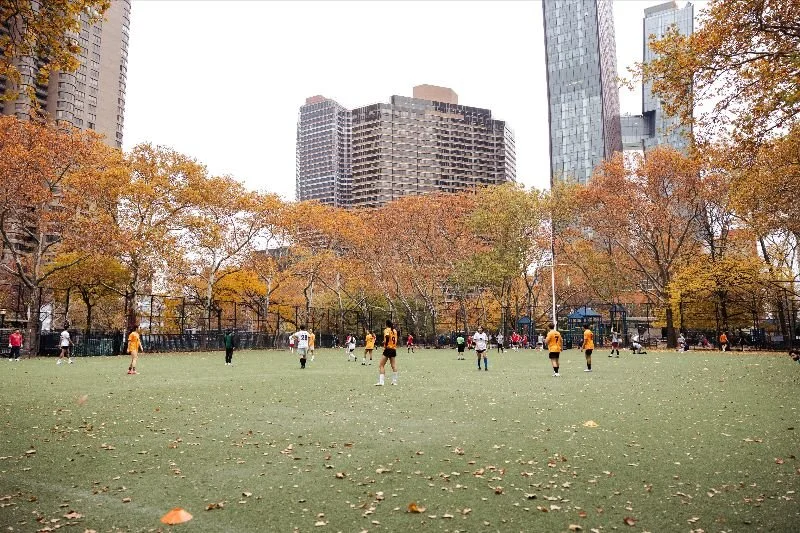
St. Vartan Park has the funding for lights - but next steps are not yet in sight.
This pattern shifted my focus towards elected leaders, where recently we've engaged the offices of Council Members Restler, Hankerson, Marte, Maloney, and Epstein, all of whom represent parks that our players use and that still lack adequate lighting.
Council Member Hankerson, who chairs the Parks and Recreation Committee, has been especially important in this process and Council Member Maloney helped ensure newly-appointed Parks Commissioner Tricia Shimamura received a letter I wrote laying out the full picture and the scale of the opportunity before the city.
You can find that letter here.
This effort expands on years of advocacy, years of follow-up, years of attempting to solve these issues through patience, relationships, and direct engagement. I'm hopeful, but as you'll see, we need help.
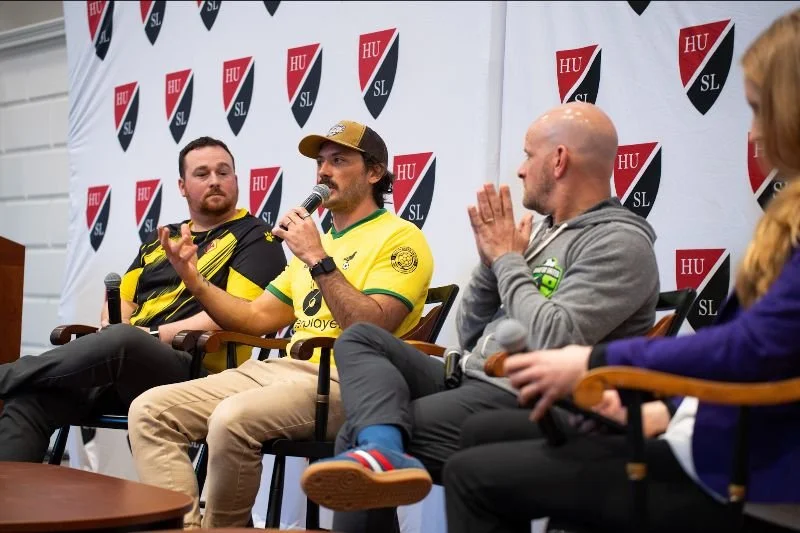
My panel discussion on community at Harvard University last week took a different tone after a "meeting" the previous night with Parks.
A Critical Meeting With Parks Leadership Is Secured
Why am I choosing now to share all of this with you? Well, you're about to find out.
Recently, our work appeared to be reaching a turning point.
After years of advocacy, we succeeded in building a meaningful coalition of council members whose districts would directly benefit from expanded lighting and better equipment access.
In fact, Council Member Hankerson and his special advisor, Clive Destiny, had spoken directly with Commissioner Shimamura, who was reportedly enthusiastic to find immediate solutions: if NYC Footy would pay for the lights, the Department would make it happen. That was the understanding. That was the opportunity.
And that effort helped lead to what would be our first ever meeting with Parks Department senior leadership. A meeting to finally advance this lighting effort.
It would be the most important meeting in the history of our relationship with the Department.
The date and time of that meeting were specifically set to accommodate the schedules of the Department’s Chief Strategy Officer and Chief Marketing Officer. It was the culmination of years of work and the first moment that felt like it might convert advocacy into actual progress.
It landed on a Friday afternoon during a family trip to Boston (see above photo). I left my wife and daughters at the museum so I could be fully prepared and fully present for a conversation I believed could change the trajectory of field access in this city.
Except the two executives from Parks leadership whose schedules had dictated the meeting, the Chief Strategy Officer and the Chief Marketing Officer, didn't show up.
There was no warning and no explanation. There was no meaningful follow-up. No indication that the significance of the moment was understood. Instead, the call consisted of me, representatives from three council offices, and the head of permits — someone with whom I had already had countless conversations on this very topic.
That moment clarified something painful: when community organizations do years of work, assemble public support, offer private funding, and come to the table with real solutions, Parks Department leadership still does not reliably meet that effort with seriousness.
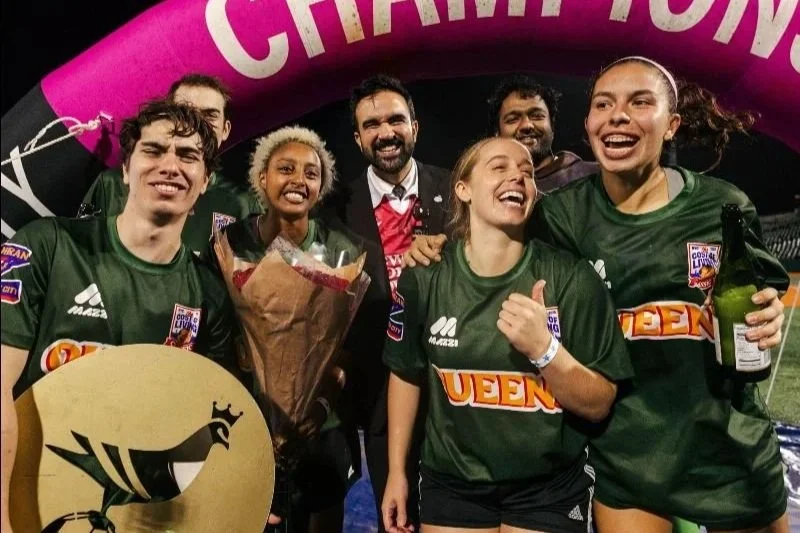
Another break in play. Enter The Mayor's Office
Working with the Mayor's Office
As many of you know, Mayor Mamdani is a veteran of NYC Footy. NYC Footy also produced his campaign's Cost of Living Classic tournament last fall. Therefore, we know, quite confidently, that this administration, like no other, knows the importance of field access and its impact on communities.
I also recently testified at a City Council hearing on the World Cup’s economic impact which questioned the Mayor's office and the EDC on what they are doing to ensure this city benefits tremendously from what will be the largest entertainment event in the history of this great town. If interested, you can read that testimony here.
At that hearing, I said plainly that without lit fields, our playing capacity is severely restricted and the city is leaving enormous social and economic value on the table. It's a citywide issue that becomes even more urgent with the World Cup approaching.
What made that hearing especially frustrating, however, was hearing the mayoral-appointed World Cup czar state that the administration was already in dialogue with leagues on these issues.
I want to be careful and fair in how I say this. I respect the current administration and I can only imagine how long it takes to properly get up to speed, let alone understand where Parks access falls on the massive list of priorities. I also want to be clear that I believe this administration has people who genuinely want to get things right.
But I also owe you honesty.
That statement did not reflect our experience at the time.
Before that hearing, we had made no fewer than five separate attempts to reach that office and sadly not one received a response. So when public claims are made that this engagement is happening, while the truth is that our real efforts are being ignored, that gap matters. It matters because accountability matters. And it matters because our community deserves to understand just how hard we have tried before asking anything of you.
The good news is that since that hearing (and because of that hearing), I am in regular communication with two members of the mayor's office on World Cup matters. It goes without saying that this is encouraging news.
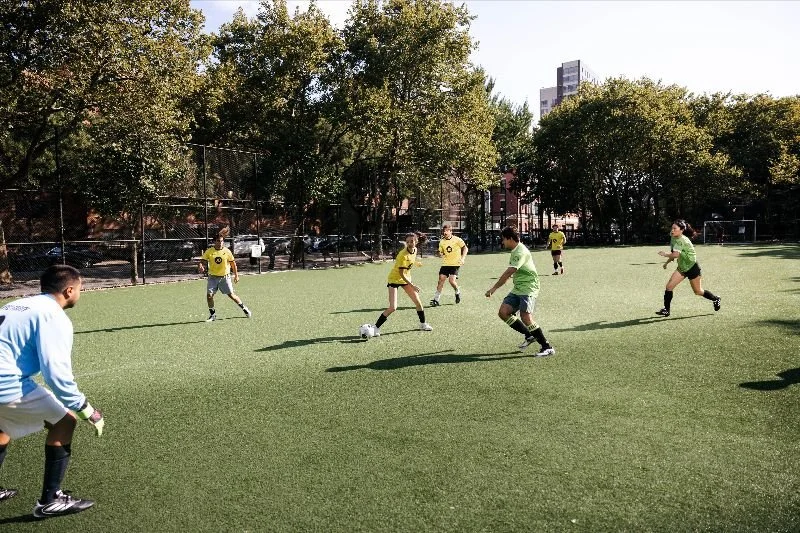
Nike Field, a field that has already successfully implemented temporary lighting
What it may take to be seen as a true partner
Where does all of this leave us?
It leaves us with the reality that the deeper issue is the absence of a real partnership model between the city and the organizations that bring people into its parks.
Our goals should be aligned. We are helping New Yorkers get active, connected, and outside. We are doing the work of community-building that public agencies say they want to support. And yet, for years, the relationship has too often felt transactional at best and adversarial at worst.
That is not sustainable. That is not good enough. It needs to change.
What we are pushing for is not special treatment. It is a functional and modern relationship in which leagues that serve the public are recognized as partners, and where support, donations, infrastructure investment, and practical ideas are actually met with engagement.
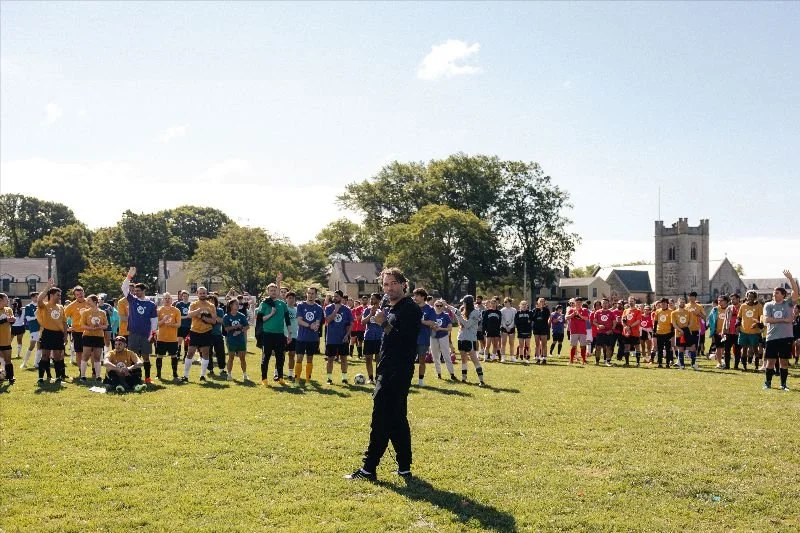
Will you join me in creating greater accessibility?
Finally, how can you help?
I understand that a letter like this — lengthy, not particularly optimistic, and sent to our full community — will likely make its way back to the Parks Department. And I’ll be honest: based on our experience, I worry it may be received with frustration or even contempt, and not as an opportunity to lean in. In short, I worry that we could find ourselves on the receiving end of pushback rather than partnership.
I hope that’s not the case. Because this is written out of a genuine desire to solve a problem that affects countless New Yorkers.
As I hope you now gather, I have done everything I can to avoid putting this burden on you and other members of our community. But we are nearing the point where collective action is necessary.
I have written all of this to ask this one thing of you: Be prepared to act.
Soon, we will come to you with a formal ask — signatures, voices, and public support. When that moment comes, I hope you will stand with us.
Every match you play is proof that this fight matters. You deserve fields you can actually use, infrastructure that reflects the role this sport plays in New York City, and a city that sees this community for what it is: a powerful force for health, connection, and public life.
Bye for now,
Tarek
Co-Founder & CEO, The Footy League