
Field Access & Equity: A Letter to NYC Parks
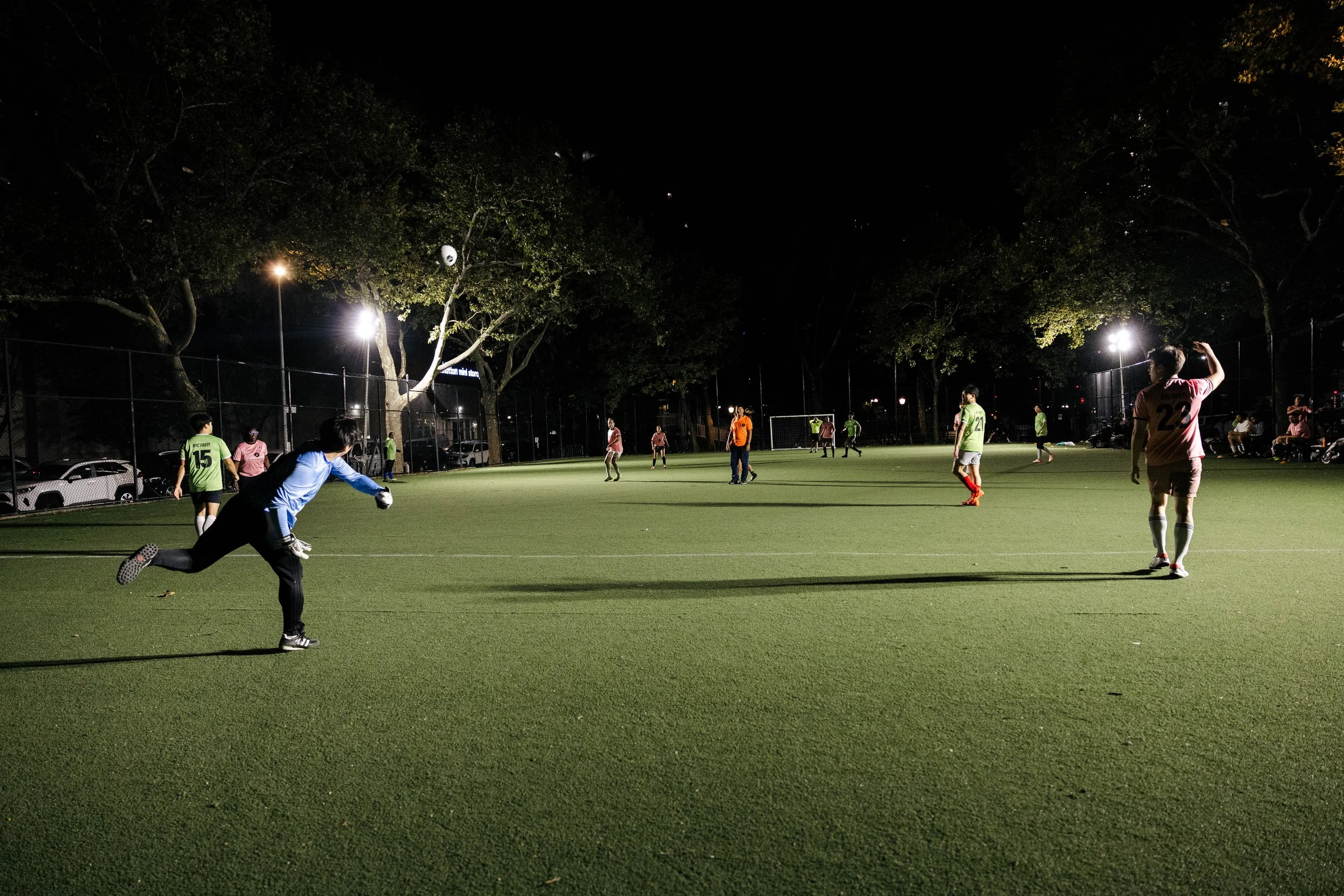
In a city that never sleeps, soccer is in demand day and night..
The following letter, written by Tarek Pertew, CEO and Co-Founder of NYC Footy and The Footy League, was sent to the NYC Department of Parks and Recreation Commissioner Tricia Shimamura.
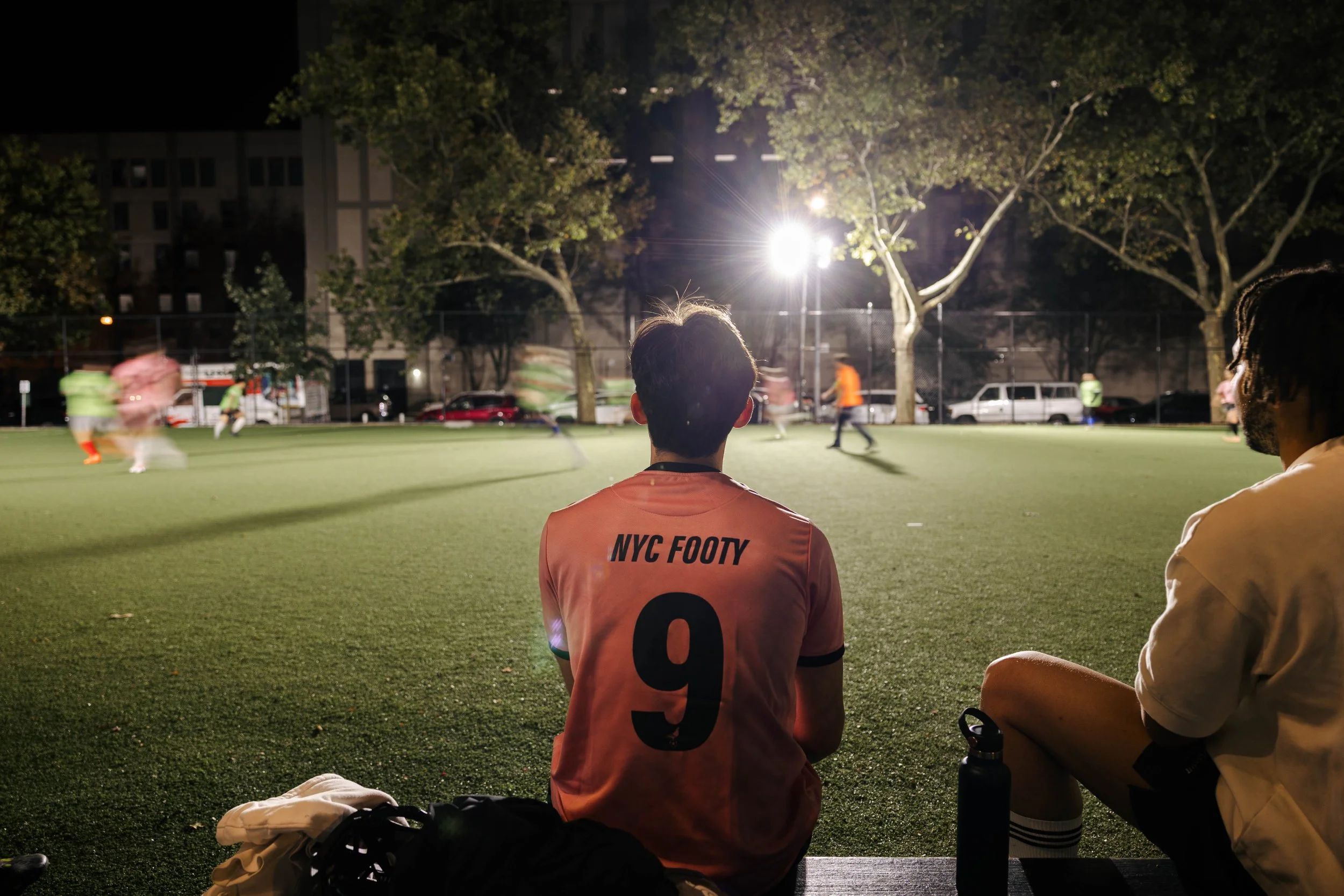
An NYC Footy player looks on during an evening game at Tanahey Playground.
Dear Commissioner Shimamura,
I am writing to raise concerns related to equity and modernization in access to NYC Parks athletic fields.
I want to begin by acknowledging the tremendous scope of work your team carries and the wide range of citywide stakeholders whose competing needs make that work especially complex. I’m not being performative when I acknowledge that the demands placed on NYC Parks are immense, and it is clear that recent updates to the permitting process were undertaken in an effort to reduce conflict and create a more consistent experience for applicants. Through numerous conversations and decisions that have directly impacted our organization, I have seen firsthand how challenging it is to balance the needs of youth programs, schools, community groups, and adult organizations.
My intent in reaching out is not to overlook those efforts, but to add context from the perspective of someone who has worked within this system for more than fifteen years. There are a few root issues that the recent changes do not yet address, and several concerns have surfaced about those changes. I believe we can bring great news to New Yorkers when it comes to field access, strengthening a system that better serves the residents who rely on parks as their primary access to physical activity, social connection, and overall wellness.
As one of the city’s largest permit holders, representing nearly 60,000 adult New Yorkers, I feel a particular responsibility to raise these concerns with urgency. New York City is on the eve of hosting the World Cup — the single largest sporting event this city has ever seen. Soccer demand is at an all-time high and growing rapidly. We are experiencing it directly: our programs are overrun, waitlists are growing, and the appetite to play has never been stronger. And yet, this season, we have lost more permitted field access than in any prior season. At the precise moment when New Yorkers are turning to soccer in unprecedented numbers, the system is producing less access, not more. I would be failing in my responsibility if I did not say plainly: it is irresponsible for the city to make soccer less accessible on the eve of the World Cup. This is not just a missed opportunity — it is a contradiction of the city’s stated commitment to public health, recreation, and community well-being.
It is also important to acknowledge a reality I believe the Department already understands well: permitted programs exist because New Yorkers actively choose them. They do so because these programs provide predictable, safe, and structured opportunities to play, allowing people to build routines around work, family, and caregiving responsibilities. Just as importantly, permitted programs offer a consistent community — a reliable place for people to reconnect week after week, build relationships, and strengthen the social bonds that underpin healthy, resilient communities. In a city where isolation and disconnection are growing challenges, social continuity is a meaningful public good.
Soccer-based permitted programs, in particular, have seen sustained and accelerating demand not only because they offer this structure, but because soccer itself is uniquely accessible, inclusive, and scalable. It accommodates a wide range of ages, genders, skill levels, and cultural backgrounds, requires minimal specialized equipment, and allows large numbers of participants to share space efficiently. In a dense city like New York, these attributes matter. The growth in adult soccer participation is not incidental; it reflects how well the sport aligns with the realities of urban life.
1. Adult Access and the Priority Framework
The current sport-specific priority framework can and should continue to reflect youth needs without unnecessarily restricting adult access. The Department recognizes two priority periods: spring and summer for bat-and-ball sports, and fall and winter for rectangular-field sports. This structure makes sense for youth institutions whose sports are tied to scholastic calendars. However, applying the same framework to adult recreation creates inequities, as adult participation is not institutionally dependent on seasons.
Based on Parks Department data, soccer receives up to seven times more permit applications than baseball and softball, including during bat-and-ball priority seasons. Yet bat-and-ball sports continue to receive priority during spring and summer, while soccer — the fastest-growing and most in-demand adult sport in the city — is constrained by seasonal rules that do not reflect how adults actually play. For adult recreation, where there is no scholastic or institutional requirement, access should be driven by participation levels and community demand.
This misalignment is not theoretical. The two renewable weeknight fields our organization held consistently for years during the spring and summer were recently reclassified and are no longer renewable. As a result, all of our high-demand weeknight access is now subject to seasonal priority timelines, despite sustained demand and demonstrated community use as the city’s largest soccer league. As soccer participation accelerates toward a World Cup summer, the current priority framework is producing less stability and less access for the very sport New Yorkers are choosing in growing numbers.
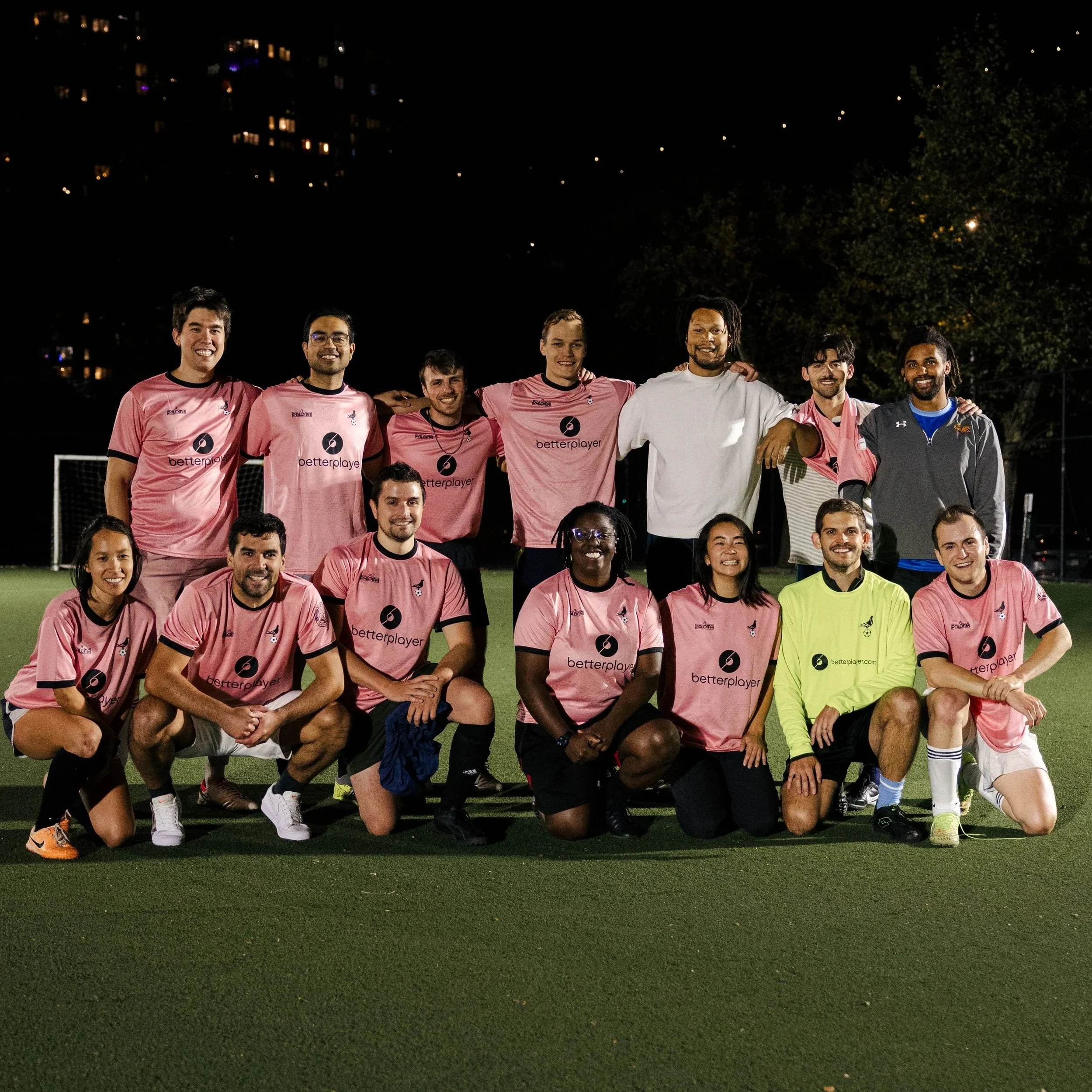
An NYC Footy team poses for a photo. Social connection is what powers Footy leagues.
2. Lighting: Immediate Solutions Exist
Spring and summer permits have already been issued, and the opportunity to reshape distribution in favor of the city’s most in-demand sport ahead of the World Cup has passed. The only solution to accommodate the demand and support a city eager to express itself ahead of the World Cup is through temporary lighting installments and strategically chosen locations.
Further, to address a larger infrastructural challenge, there are significant inequities in fall and winter access. Daylight disparities coupled with seasonal weather patterns make fall and winter uniquely challenging. Once daylight loss pushes sunset earlier than 6:00 p.m., fields become effectively unusable for working adults unless they are lit.
I was grateful to have the chance to briefly speak with you about this issue, Commissioner, and I heard clearly that lighting is a priority for the Department. I also understand the concern raised about short-term lighting solutions: past installations of battery-powered lights invited vandalism, with batteries stolen from unlocked gates. That experience is understandable, and I do not dismiss it. However, I want to respectfully raise a distinction that I believe is material.
Fuel-powered temporary lighting is already operational at three parks in our network and has not experienced incidents of vandalism or theft. This is not a hypothetical — it is a working model. The conditions that created past problems (unlocked gates, unattended battery units) are not inherent to all temporary lighting; they are specific to a particular implementation. Fuel-powered lights in active, staffed use represent an immediate, lower-cost pathway to activating fields that currently sit dark and unusable during the most challenging months. I would strongly encourage the Department to explore this approach as a bridge while permanent lighting infrastructure — which I know is costly and time-intensive — continues to move forward. The communities that depend on these fields cannot wait years.
Additionally, and to further exemplify the priority season inequity, when a significant snowstorm hits, hours of paid permit time go unused due to unplayable field conditions — and this lost time is not covered by credits or refunds, which can be financially crippling for permit holders, as it has been this past winter. By way of example, NYC Footy accumulated nearly $20,000 in paid permit time that we were unable to use. What is already a heavily reduced season in terms of accessibility is only exacerbated by likely and expected weather disruptions without any downside protection for our financial commitments.
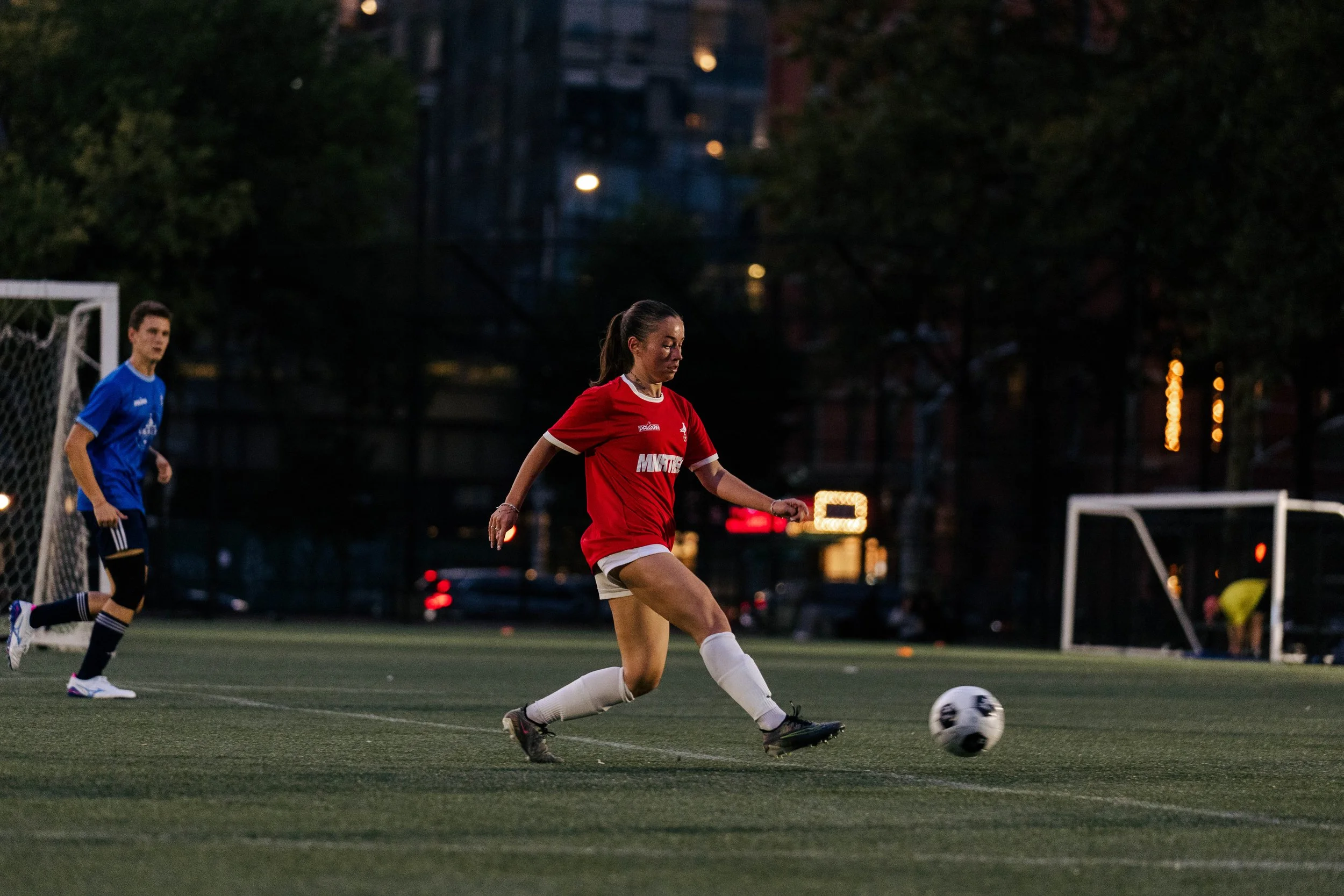
A Chelsea Park match taking place in evening hours (aka when adults have time to play)
3. The Direction of Access Policy
I also want to be clear that these concerns have been raised directly with the permitting office over time and always in good faith. I have hesitated to elevate them further precisely because we have a strong, professional working relationship. Unfortunately, in more recent conversations, I have found it concerning that some discussions have focused less on how to expand access and more on how to constrain it.
For example, the notion that fields should not be used “too much” because they need to rest — particularly when applied to artificial surfaces — raises difficult questions. While field longevity is important, it is hard to reconcile prioritizing the rest of a synthetic field over the physical and mental wellness of New Yorkers who depend on these spaces. If increased use accelerates wear, that is a challenge the City must plan for and adapt to, rather than a justification for limiting access. Similarly, proposals to subdivide large fields into smaller, separately permitted spaces would raise costs for permit holders — particularly following recent fee increases — and overlook the operational reality that leagues require multiple concurrent games to function. Without that flexibility, leagues become smaller, less viable, and ultimately less accessible to the communities they serve.
4. Equipment Partnerships: A Better Model Is Possible
There is also a meaningful opportunity to strengthen the partnership between NYC Parks and community organizers around field equipment. In recent months, the Department removed goals, lock boxes, and shared equipment that leagues had accumulated over time to ensure timely starts, full use of permitted hours, and avoidance of transporting heavy equipment to and from fields. These assets existed not to circumvent rules, but to solve real access constraints when time on fields is already extremely limited.
In conversations with the Department, I had multiple calls to present a specific and strategic expansion of an existing donation precedent across three (3) key locations. Despite multiple conversations, I have yet to receive a response to any of those discussions. More recently, after expressing this concern, I was instead directed to the “Adopt a Park” program as the appropriate pathway for equipment donations. I appreciate that guidance, and I want to engage with it seriously (as of this writing, I continue to wait a reply to my March 4th inquiry). However, the Adopt a Park program requires a minimum $10,000 commitment and, critically, does not designate how the donation is used. That structure is not suited to the targeted, operational need leagues have, which is simply to ensure that goals and basic equipment are available at the specific fields where leagues operate.
I also understand the equity concern that has been raised: if one park receives a donation, it may not be fair to others that do not. I want to address this directly, because I believe it deserves a stronger response than the current policy provides. Denying access improvements to a community because other communities have not yet received them is not an equity policy — it is a policy that produces uniformly reduced access. The alternative is to begin a plan: create a formal, sanctioned pathway for equipment partnerships with responsible permit holders, and build toward expanding it across parks over time. Equity is achieved by lifting more communities up, not by holding all communities to the same constrained baseline.
Leagues are currently required to transport heavy goals and equipment to and from parks each week, creating safety risks, increasing costs, and reducing playable time within already constrained permits. A clear pathway for equipment donation would immediately improve access and safety for communities that cannot bring their own equipment.

Moving forward is made possible when we all work together.
5. A Path Forward
New York City deserves a parks system that reflects how its residents actually play. Soccer is not a niche activity. It is one of, if not the most diverse, accessible, and unifying recreational sports in the city — and it is about to be at the center of the world’s attention when the World Cup comes to New York. This is a rare moment to lead. I respectfully ask the Department to consider:
• Modernizing the adult priority framework to reflect participation levels and community demand rather than sport-specific seasonal windows that were designed for youth institutional schedules.
• Adopting fuel-powered temporary lighting as an immediate bridge to expand accessible field hours, recognizing its proven track record in our current parks without incident.
• Investing in permanent lighting infrastructure in the areas of highest adult recreational soccer demand.
• Creating a clear, strategic pathway for equipment partnerships with responsible permit holders — with a roadmap to expand equitably across parks over time.
• Addressing permit credit or refund policies for weather-related field closures that leave paid permit time unused.
My decision to raise these concerns here reflects both the urgency of the issues and my responsibility to the tens of thousands of New Yorkers we fight for. I hope this outreach is interpreted as an appropriate step to address structural challenges at the leadership level. My goal is to support your team in strengthening a system that works for more New Yorkers, not fewer. To shift the relationship between Parks and permit holders from one that is adversarial to one built on the spirit of true partnership.
I would welcome the opportunity to meet, share data, and explore these ideas further. Thank you for your leadership and for your continued service to New York City’s parks.
Warm regards,
Tarek Pertew
Founder & CEO, NYC Footy