
A Letter Submitted to the NYC Council - Committee on Parks and Recreation
The following testimony was submitted to the New York City Council - Committee on Parks and Recreation in March of 2026 by NYC Footy Founder & CEO Tarek Pertew.
My name is Tarek Pertew. I am the Founder and CEO of NYC Footy, New York City's largest adult recreational soccer organization. We represent nearly 60,000 adult New Yorkers across all five boroughs — men and women of every background, age, and ability level — who come together week after week to play, compete, and build community on the city's parks and fields.
I submit this testimony in support of increased investment in parks infrastructure, permitting staffing, lighting, field equipment, and the repair and replacement of unsafe playing surfaces across the city. These are not niche concerns for a narrow constituency. They are investments in the physical and mental well-being of millions of New Yorkers, in the economic vitality of surrounding neighborhoods, and in the city's ability to fulfill its stated commitment to public health and community resilience.
I have worked within this system for more than fifteen years. What follows is not theoretical. It is drawn from direct, daily experience operating programs at parks throughout New York City.
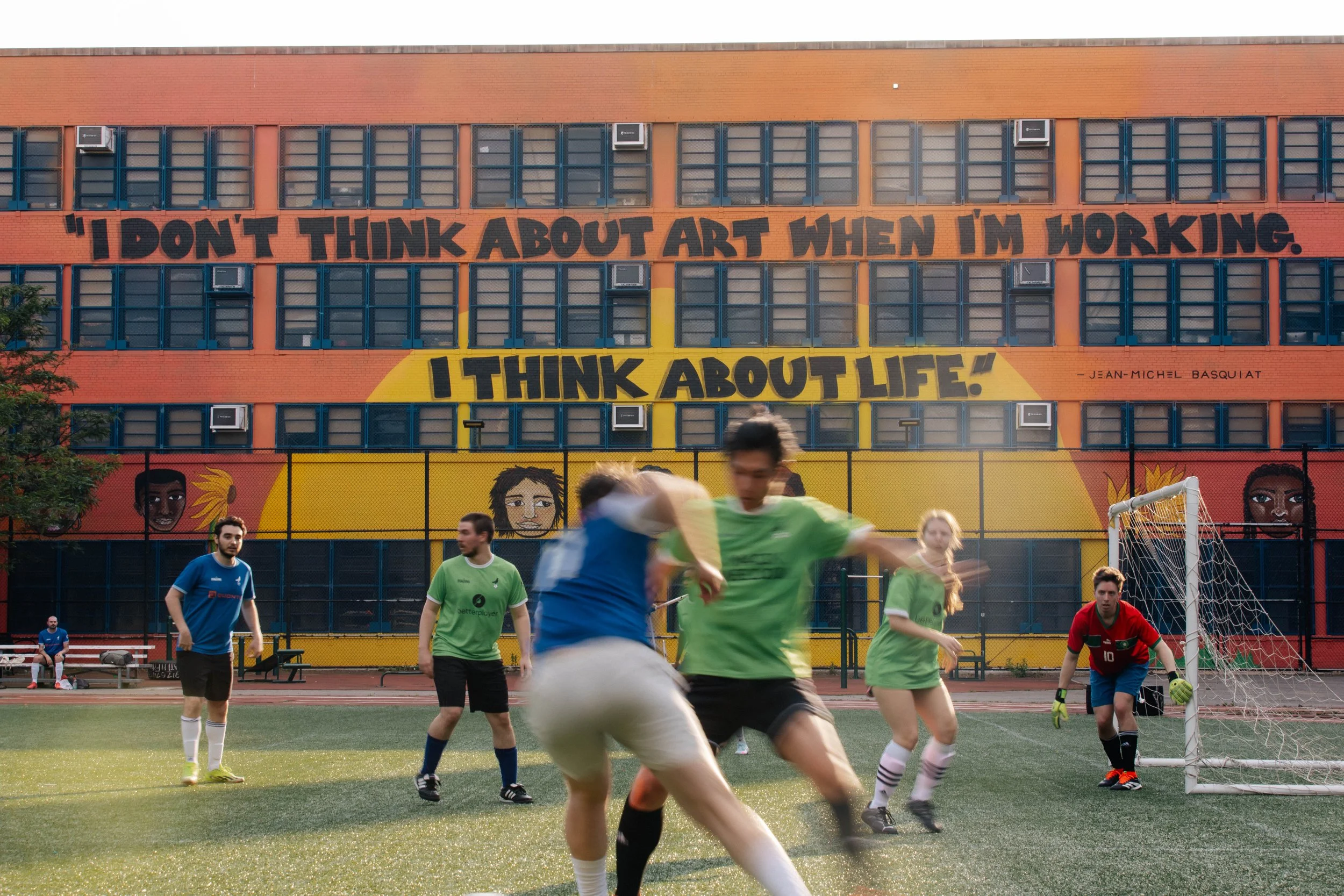
The demand to jump into an NYC Footy league has never been greater.
1. New Yorkers Want to Play. The Demand Is Unambiguous.
Participation in adult recreational sports in New York City has never been higher. Our waitlists are growing. Our programs fill within hours of opening. The appetite to play — to be outside, to move, to connect — is real, powerful, and citywide. NYC Parks records 527 million park visits per year, and 99% of New Yorkers live within a ten-minute walk of publicly accessible green space. The potential is enormous.
Soccer, in particular, has seen sustained and accelerating growth. It is uniquely accessible: it requires minimal equipment, accommodates a wide range of ages, genders, skill levels, and cultural backgrounds, and allows large numbers of people to share space efficiently. As the World Cup comes to New York City this summer — the single largest sporting event this city has ever hosted — the moment to invest in the infrastructure that supports this participation has never been clearer.
New Yorkers want to be outside. They are showing up, in growing numbers, every single week. The barrier is not desire — it is infrastructure.
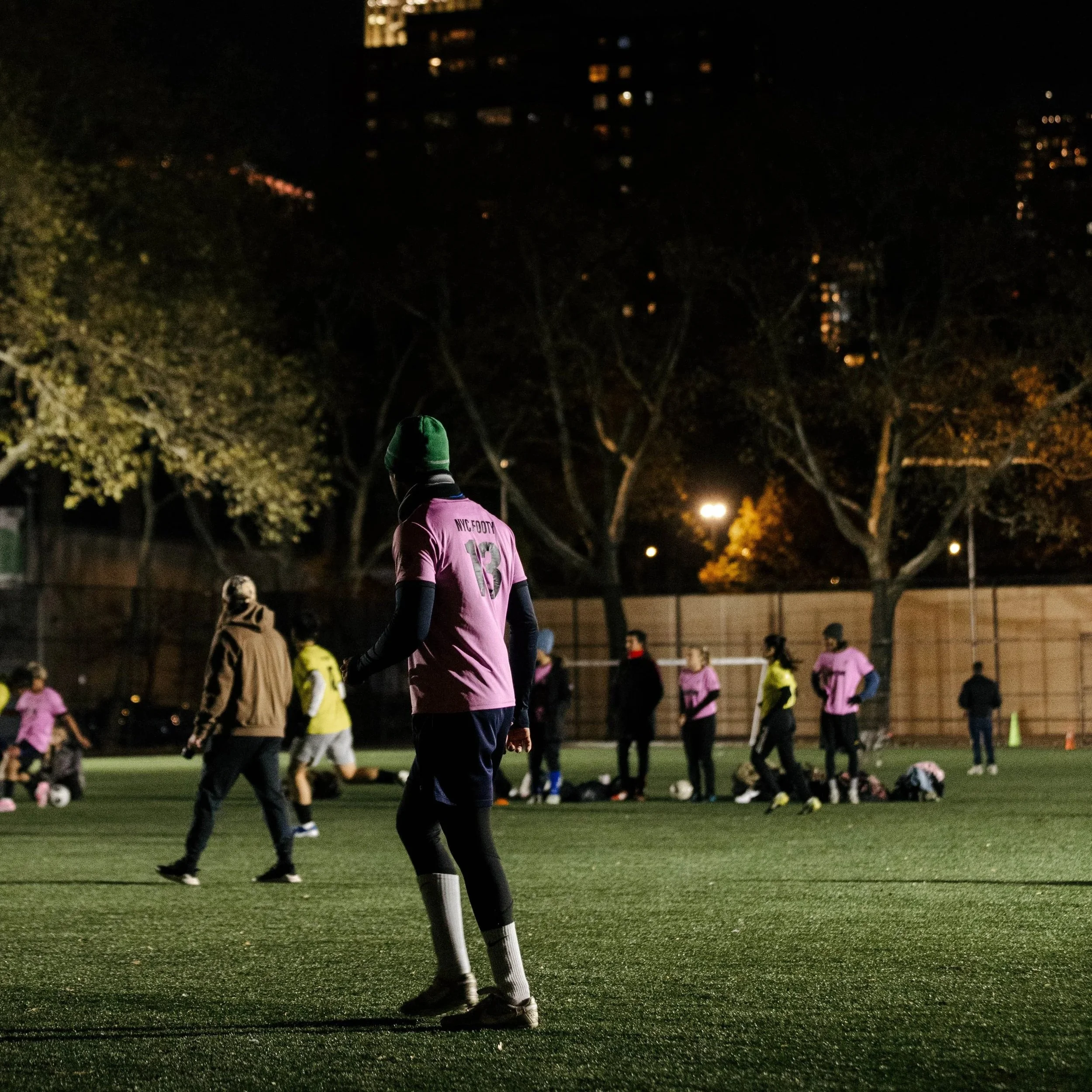
Chelsea Park is a prime example of a popular field that can attract players at all hours.
2. Lighting: Darkness Is Eliminating Access for Working New Yorkers
For working adults, evening hours are when play happens. A field that is dark at 5:30 p.m. is a field that does not exist. Once daylight savings ends and sunset drops below 6:00 p.m., unlit fields become entirely unusable for the working men and women who rely on them. This effectively eliminates months of play for a significant portion of our participants.
The solution does not have to wait for permanent infrastructure. Fuel-powered temporary lighting is already operational at three parks in our network, and has experienced zero incidents of vandalism or theft. This is a proven, lower-cost bridge solution that could activate fields across the city immediately. We respectfully urge the Committee to support a dedicated budget line for temporary lighting at high-demand permitted fields during fall and winter months, alongside continued investment in permanent lighting infrastructure.
We also note that when fields are closed due to significant snowstorms, permit holders lose hours of paid time with no credit or refund. This is a financial hardship for organizations that budget tightly to keep participation affordable. We ask the Committee to examine this policy directly.
● Fund a pilot program for fuel-powered temporary lighting at high-use unlighted fields during fall and winter.
● Prioritize permanent lighting installation at fields with demonstrated high permit demand. ● Establish a credit or refund policy for permit hours lost to weather-related closures.
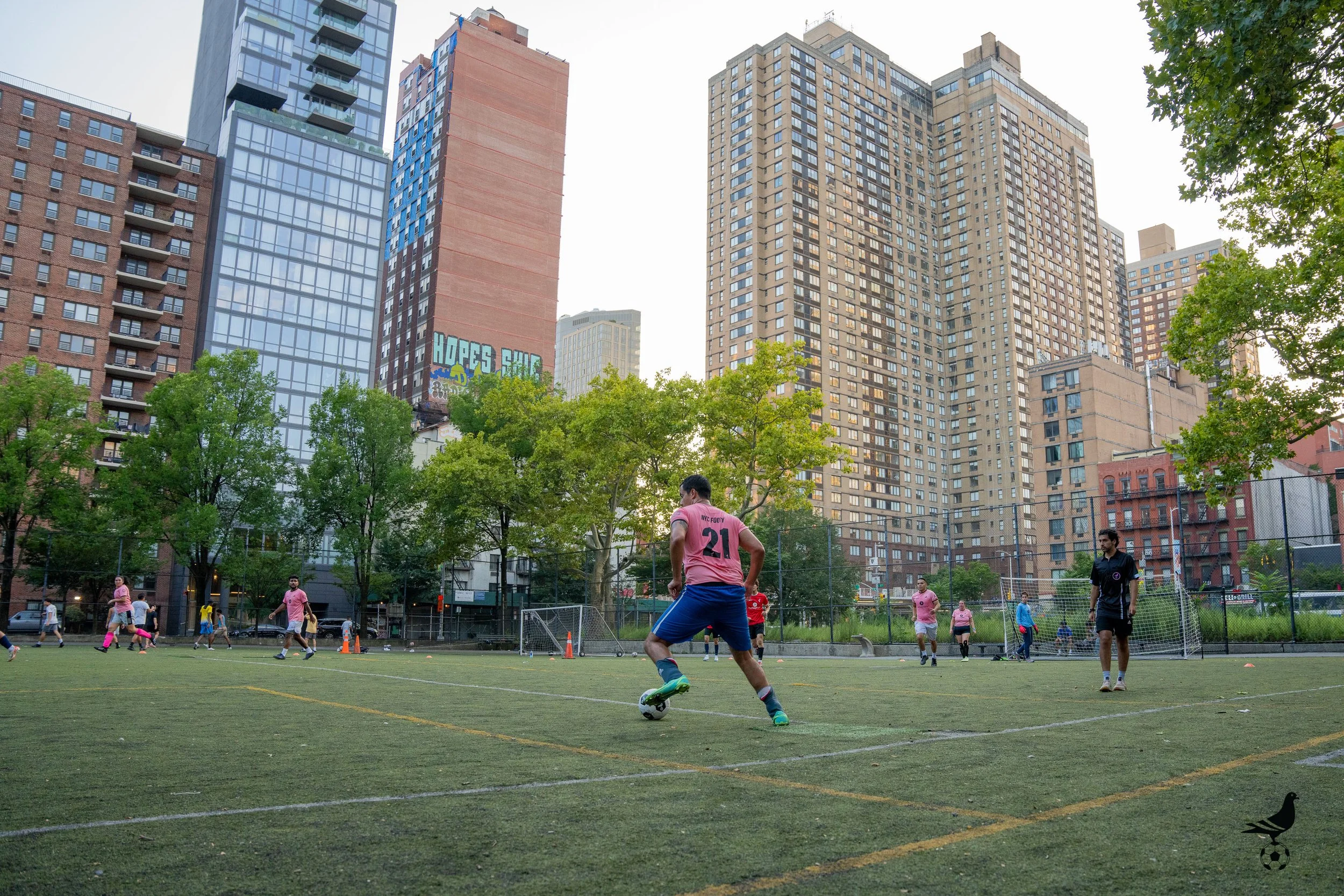
The turf at Marx Bros Playground is no laughing matter.
3. Field Conditions: Dangerous Turf Is Not Acceptable
High participation numbers are being celebrated by city leadership, and rightly so. But the fields where that participation happens are, in many cases, dangerously deteriorated. Worn turf, uneven surfaces, exposed infill, and deteriorating equipment create real injury risk for the New Yorkers using these spaces every week.
Three fields our participants use regularly — Murray Playground, Marx Brothers Playground, and Sara Roosevelt Park — are in conditions that require immediate attention. These are not marginal facilities. They are among the most heavily used fields in our network. The fact that they are heavily used should be celebrated as proof of demand; it should not be the reason maintenance is deferred.
Across the system, too many fields sit in chronic disrepair. The Trust for Public Land's analysis of NYC Parks found that the system generates over $9.1 billion in annual recreational value to New Yorkers. That value depends entirely on the fields being safe and usable.
4. Permitting Staffing: The Bottleneck That Blocks Access
NYC Parks is operating with nearly 1,000 fewer workers than the prior year. The NYC Council has called for a $38.2 million restoration to bring back 659 positions that were eliminated through budget cuts and a citywide hiring freeze. The permitting office is among the most in need.
The consequences are felt directly by the organizations and individuals trying to access parks. Permit processing times have lengthened significantly. Renewal timelines are unpredictable. Communications go unanswered for weeks. The staff that remain are clearly working hard under impossible conditions, but the system is not resourced to serve the demand placed upon it.
This is not a minor administrative inconvenience. Delays in permitting translate directly to lost play time, reduced program enrollment, and organizations being unable to plan the schedules their participants depend on. For a family trying to sign a child up for a Saturday program, or a working adult planning an evening soccer league around their childcare schedule, permitting delays have real, material consequences.
This doesn’t factor the growing demand to host community events in the build up (and during) the World Cup, but all requests for tournaments have gone unanswered to date, making our ability to leverage NYC Parks for these community events all but impossible.
Every week a permit is delayed, New Yorkers lose access. Staffing the permitting office is not overhead; it is access.
● Fully restore the 659 Parks Department positions recommended by the NYC Council, with priority hiring in the permitting office.
● Establish permitting response time standards with public accountability metrics. ● Invest in permitting technology to reduce administrative burden and processing time.
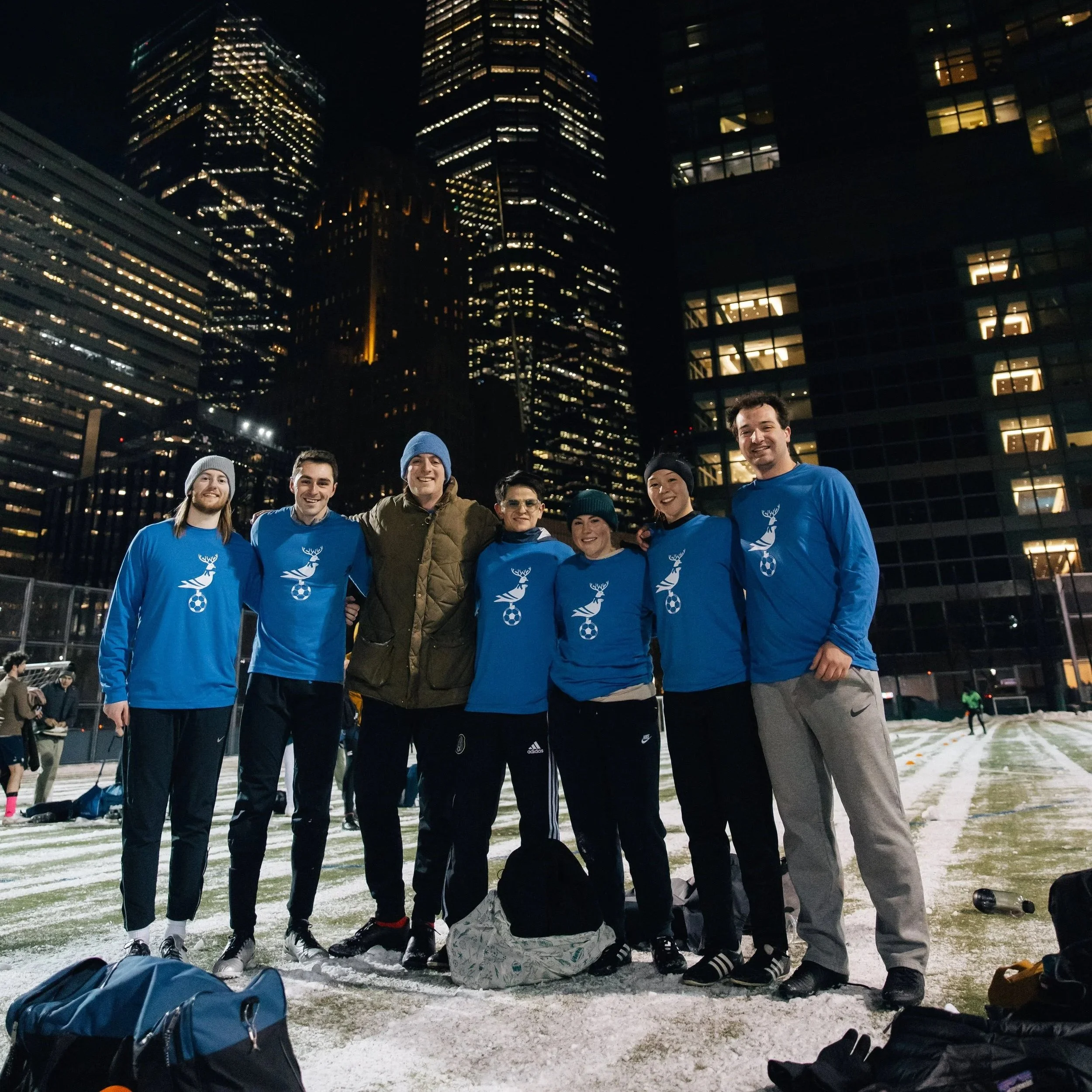
Team sports create much desired social connections - especially in NYC’s colder months.
5. The Loneliness Epidemic: Parks Are the Prescription
New York City is facing a loneliness crisis. According to the NYC Department of Health, more than half of all New Yorkers report feeling lonely at least some of the time. The U.S. Surgeon General has designated loneliness a public health epidemic, comparable in its health consequences to smoking 15 cigarettes per day, with documented links to elevated risk of depression, anxiety, cardiovascular disease, dementia, and premature death.
Recreational parks and permitted programs are among the most effective and scalable antidotes to social isolation we have. They provide what technology and remote work have taken away: a predictable, recurring reason to show up in person, alongside the same people, week after week. The social bonds formed in a recreational soccer league — the teammates who know your name, the opponents who see you every Saturday — are not trivial. They are the connective tissue of a resilient, healthy community.
In a dense and often isolating city like New York, parks infrastructure is mental health infrastructure. It is a community health infrastructure. Failing to invest in it is not a budget-neutral choice. Instead, it shifts costs onto emergency services, mental health systems, and healthcare, where the price tag is far higher.
The data make the case plainly: physical activity, consistent social interaction, and access to outdoor green space are among the best-documented predictors of long-term physical and mental health. The city has, within its parks system, one of the most powerful and underutilized public health tools available. We are asking the Committee to treat it that way.
6. The Economic Case: Parks Pay For Themselves
Investing in park infrastructure is not a budget burden, but an economic driver. The Trust for Public Land's comprehensive analysis of the NYC Parks system found that it generates $9.1 billion in annual recreational value, contributes over $15.2 billion in increased property values for homes within 500 feet of parks, and translates to at least $101 million in annual property tax revenue for the city.
NYC residents spend an estimated $681 million annually on sports, recreation, and exercise equipment, which flows directly through local businesses. And domestic travelers who visit New York City in part to participate in outdoor recreational activities spend an estimated $17.9 billion in a typical year. Every park that is well-lit, well-maintained, and accessible activates that spending. Every field that sits dark or unusable does not.
The business corridors and neighborhoods surrounding active parks — delis, cafes, pharmacies, retail stores, restaurants — all benefit when those parks draw people in. The expanded investment needed to properly fund parks infrastructure is not a cost to the city. It is a return on investment that pays back in property values, tax revenue, local spending, and avoided healthcare costs.
The question is not whether the city can afford to invest in parks. The question is whether it can afford not to.
7. Summary of Recommendations Informing a Critical Budget Increase in Parks
● Restore the 659 Parks Department positions, with priority staffing for the permitting office, to address permit processing delays that directly block access.
● Fund a pilot program for temporary fuel-powered lighting at high-use unlighted fields during fall and winter months, building on the zero-incident track record already established. ● Accelerate permanent lighting installation at fields with documented high permit demand, prioritizing locations with the greatest adult recreational use.
● Immediately inspect and repair or replace the playing surfaces at Murray Playground, Marx Brothers Playground, and Sara D. Roosevelt and establish a transparent, rolling lifecycle plan for all synthetic turf fields.
● Establish a formal, sanctioned equipment partnership pathway for responsible permit holders to donate and maintain goals and basic field equipment at specific parks, with a roadmap to expand equitably across the system.
● Implement a credit or refund policy for permit hours lost to weather-related closures, preventing financial harm to organizations that keep programs affordable for New Yorkers.
● Recognize parks investment as public health investment, and budget accordingly, with the understanding that every dollar spent on safe, accessible, well-lit parks returns multiples in tax revenue, local economic activity, and avoided downstream healthcare costs.
New York City is on the eve of hosting the world. Soccer, the most inclusive, accessible, and globally unifying sport, is about to be at the center of the world's attention here. This is not a moment to let fields sit dark, surfaces go unrepaired, or permits go unprocessed. This is a moment to lead.
I represent tens of thousands of New Yorkers who want nothing more than to be outside, to move, to connect, and to play. They are showing up. The infrastructure needs to show up too.
I welcome the opportunity to provide any additional data, meet with Committee staff, or support the work of strengthening the parks system for every New Yorker it serves. Thank you for your time and your service to this city.
Respectfully submitted,
Tarek Pertew
Founder & CEO, NYC Footy