
The NYC Footy Neighborhood Guide: Frederick Douglass Playground
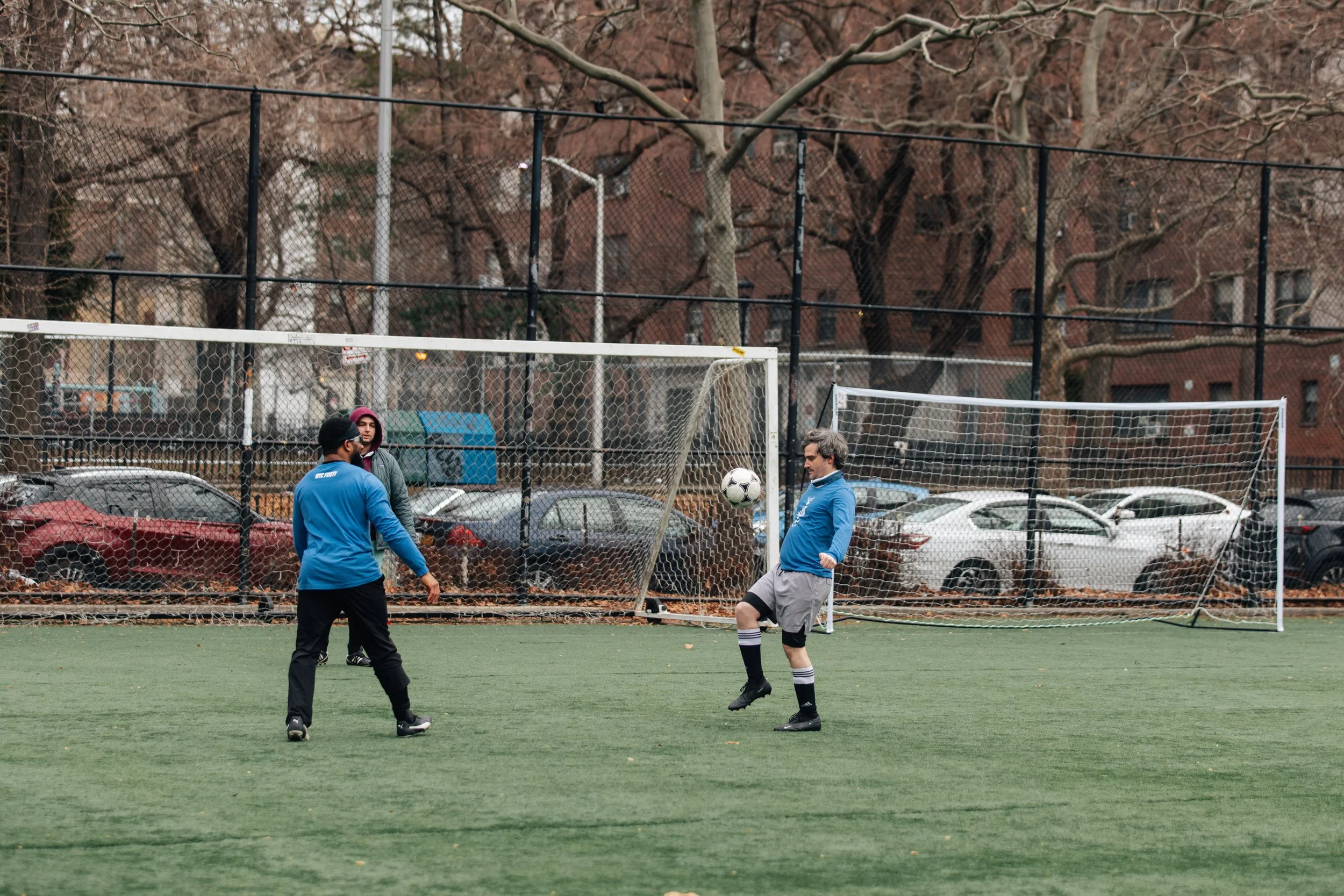
Frederick Douglass Playground, a perfect uptown Manhattan pick!
Some venues excel at one thing. Great pitch, awkward journey. Fantastic neighborhood, average facilities. Frederick Douglass Playground is different. It quietly ticks every box.
Every football team needs an all-rounder - and this is NYC Footy's equivalent: the dependable engine room powering fantastic leagues from January through December.
Room for Two
Frederick Douglass Playground runs two 7v7 turf pitches side by side, which makes it Footy's busiest and most popular home on the Upper West Side. There's almost always a game in progress, often two at once, and a comfortable buzz of families, kids on the swings, and pickup basketball running alongside whatever's happening on the turf.
It's a small footprint doing a lot of work: under two acres carrying a full sports complex, and somehow never feeling cramped for it.
The Name Behind It
The playground opened on September 10, 1958, built the year before on land the city acquired for the benefit of the neighbouring Frederick Douglass Houses. It's named, fittingly, after the remarkable man himself.
Born into slavery in Maryland around 1818, Douglass taught himself to read in secret - literacy for enslaved people being illegal at the time - before escaping to New York in 1838.
He went on to become one of the towering figures of the abolitionist movement: an orator, publisher of The North Star, and author of the era-defining Narrative of the Life of Frederick Douglass. Nearby Frederick Douglass Circle also honours his legacy.
Getting There
The 1 train is the easy option, with a stop at 103rd Street putting you a short walk from kick-off. The B and C also run along Central Park West a little further east, handy if you're coming from that side of the park.
The park is also served by nearby Citibike stations and by the M7 and M11 buses.
The Facility
Good-quality artificial turf throughout, split into two side-by-side 7v7 pitches, with basketball and handball courts, swings and a spray shower rounding out the rest of the space. It's a genuine neighbourhood hub - as much a place for families and after-school kids as it is for Footy on a weeknight - and it stands up well to New York's seasons, remaining playable year-round.
Pre-Game
Broadway gives this stretch of the Upper West Side its easy-going character, lined with neighbourhood cafés, independent shops and long-standing local institutions.
Head to Sal & Carmine's on Broadway, between 101st and 102nd Streets - close enough to the pitch that there's really no good excuse not to. Founded by the late Sal Malanga in 1959, the pizzeria has since earned a place in the Pizza Hall of Fame. Sal, once dubbed the "Dom DeMarco of Manhattan", built its reputation the old-fashioned way: hand-making every pizza, and more than 65 years on, it's still one of the Upper West Side's great slice institutions.
Post-Game
The Throwback, on Amsterdam Avenue near 95th Street, is an official NYC Footy bar partner - which means an actual Footy drinks menu waiting for you, not just a friendly welcome. Think a proper sports bar done right: walls of memorabilia, plenty of screens, and a downstairs pinball setup for anyone not ready to call it a night.
Wear your NYC Footy jersey to score a few discounts.
Team Bonding
Riverside Park is a few blocks west, and the stretch overlooking the Hudson around 100th Street is one of the best sunset spots in Manhattan - benches, breathing room, and a view across the water that's hard to beat after a hard-fought 7v7.
Walk east, and you will find Central Park and one of its greatest hidden secrets, The Pool, a shaded pond and paths where you can relax and bird-watch any day of the week.
Stoppage Time
Walk about ten blocks north, and you'll hit Frederick Douglass Circle, the "Gateway to Harlem" at 110th Street and Central Park West - the city's principal monument to the man this playground is named for.
The intersection was named in Douglass's honour back in 1950, yet the striking bronze statue at its centre didn't arrive until 2011. For sixty-one years, the circle carried his name before it carried his likeness.
Frederick Douglass believed that public spaces, education and opportunity should belong to everyone. More than a century after his death, it's somehow fitting that one of New York's busiest little neighbourhood playgrounds continues to bring people together in his name.