Introducing The Footy League: Bringing the NYC Footy Experience Nationwide

For more than a decade, NYC Footy has been building what many players consider the gold standard for recreational soccer. Since launching in 2010, the league has grown into the largest co-ed recreational soccer community in the country — known for its consistency, quality, and culture.

Now, as NYC Footy enters its next chapter, that experience is going national with a new entity, The Footy League (TFL).

Why the Change, and Why Now?

Tampa Bay is the newest addition within The Footy League.

According to Footy League CEO Tarek Pertew, the shift is both simple and long overdue.

“The purpose of The Footy League is to take what we’ve done with NYC Footy and bring it nationally. That’s the simplest story,” Pertew said. “We have developed what we believe to be the greatest recreational soccer experience in the country — and there are a lot of people who have left New York to go to other cities and wish it was there.”

Over the years, NYC Footy has regularly heard from former players who moved away and found themselves searching — unsuccessfully — for a comparable league in their new city. The Footy League was created to fill that gap.

Rather than exporting “NYC Footy” everywhere, the organization is establishing The Footy League as the governing body under which all local Footy markets will live — including NYC, New Jersey, Westchester, Miami, Tampa, and Dallas, with more to come.

“The Footy League is where all these local leagues ultimately report into,” Pertew explained. “Miami Footy plays in The Footy League. NYC Footy plays in The Footy League. If you’re playing in a market with ‘Footy’ after it, you know it’s part of the same governing body.”

Local Identity, National Standards

Berni and FC Bayern Munich joined us this year to celebrate our Brooklyn Bridge Park champions.

One of the core reasons for the change is respect for local communities.

“No one in Miami wants to get an email from someone from NYC Footy,” Pertew said. “What worked in New York is not necessarily going to work in Miami. That’s why we need local intelligence — people who live and breathe those cities.”

Under The Footy League model, each market maintains its own local leadership, referees, partnerships, and community voice — while benefiting from national infrastructure, shared resources, and consistent standards.

What Stays the Same Across Every Footy Market

The Footy League’s signature Paloma ball, coming to a goal near you!

While each city will feel local, the experience on the field will be familiar everywhere.

“What you’ve grown to love in New York is the product you’re going to get everywhere,” Pertew said.

Across all Footy League markets, players can expect:

  • Co-ed leagues

  • Skill-based divisions (starting with core levels, expanding over time)

  • Consistent rules and referee training

  • Mandatory shin guards

  • Clear codes of conduct

  • High-quality jerseys

  • Events and bar partnerships

  • A strong emphasis on community and sportsmanship

“Consistency is important,” Pertew said. “If you play Footy in New York, you should know what you’re getting in Miami, LA, or Seattle.”

Where Things Will Differ

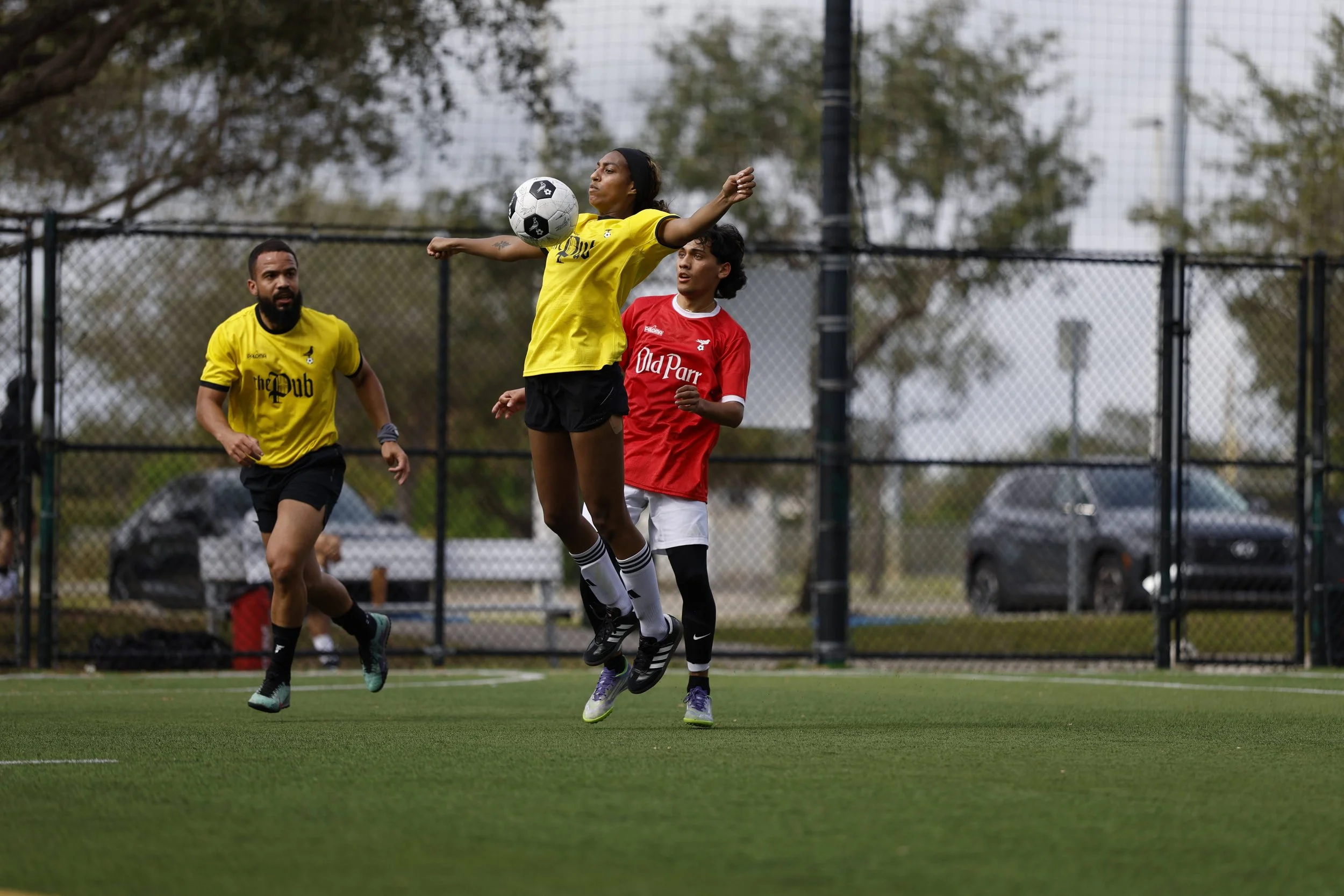
Miami Footy is all about authentic representation of our Magic City community

Not everything will be identical — by design.

Formats, pricing, and locations will reflect local preferences.

“Seven-a-side versus five-a-side versus 11-a-side — we’re going to lean into what the market wants to play,” Pertew explained. “Where we play is going to be the thing that’s most informed by the community.”

That flexibility allows Footy League markets to thrive in both cities and suburbs — whether it’s Manhattan, Westchester, Pembroke Pines, or outside Tampa.

Why The Footy League Matters Right Now

The timing isn’t accidental.

Pertew points to broader cultural shifts — from remote work to social isolation — as part of why recreational sports matter more than ever.

“The nation has suffered measurably from COVID and advancements in technology that have isolated people,” he said. “More than ever, people need hobbies that force them out of the house.”

With the World Cup approaching and soccer continuing its rapid growth in the U.S., the sport is uniquely positioned to bring people together.

“Soccer just welcomes everybody,” Pertew said. “You don’t have to be a freak athlete. It’s the perfect balance of team dynamic, individual strengths, and socialization.”

A Consistent, Elevated Experience

Pertew compares The Footy League to brands like Equinox or WeWork — experiences where expectations are clear the moment you walk in.

“One of our promises is that you know what you’re going to get,” he said. “That’s why we’re investing so heavily in media — so you can actually see the experience before you step on the pitch.”

From communication and customer service to uniforms and officiating, the goal is clarity and quality.

“You step on the field knowing you’re dealing with an organization that values a high-quality experience,” Pertew said.

When Is It Time for Footy to Come to Your Town?

Did we mention The Footy League hosts post match social hours?

According to Pertew, the signs are usually obvious.

“If there’s a strong soccer culture but no structured, organized, casual league — or it’s underwhelming — it’s time for Footy to make an appearance,” he said.

Or, more simply:

“If you find yourself saying, ‘It’s hard to meet people here,’ then Footy should probably be in your town.”

From converting large pickup groups into organized leagues to partnering with local referees and businesses, The Footy League is built to scale — without losing its soul.

And for those who’ve played before?

“If you move to a new market, you can jump right in,” Pertew said. “You already know the rules. You already know the culture.”

That’s the vision behind The Footy League: local leagues, national standards, and a shared love of the game — everywhere.

Next
Next

Soccer Slang: Field Tilt