

Soccer Slang: Game State
Is this the best position to take a peak at the scoreboard? Photo: Getty Images
Soccer may ultimately be about putting the ball in the net — but the modern game is thick with jargon.
As tactics become increasingly shaped by data and analytics, players and coaches now speak an ever-evolving technical language — one that NYC Footy’s Soccer Slang series is here to decode.
From Gegenpressing to Rest Defence, we translate the phrases that make contemporary soccer sound more like science fiction.
This week, we look at one of the most overlooked factors in understanding what’s really happening on the pitch: game state.
Game State
Mentality is everything in sport, as in life, and it’s remarkable how dramatically attitudes can shift during a match.
Every NYC Footy regular can relate to this: you start a game in full gung-ho mode, grab an early goal — and then retreat into your shells.
Sure, that can be a legitimate strategy, but this sudden ‘180’ often comes down to human instinct: the urge to protect what we have.
A team’s approach — consciously or subconsciously — is almost always shaped by the scoreline.
Game state data aims to reveal how a team’s behaviour, strategy, and performance change depending on whether they’re ahead, level, or behind.
For example, a team leading 2–0 in the 60th minute will not play the same way as one desperately chasing an equaliser. That’s why it’s crucial to understand how game state skews core metrics such as possession, shot counts, expected goals (xG), and much more.
Teams in front often look statistically worse: less possession, reduced chance creation, and more defensive work.
Meanwhile, teams chasing the game tend to post inflated attacking numbers as they push forward in search of a comeback.
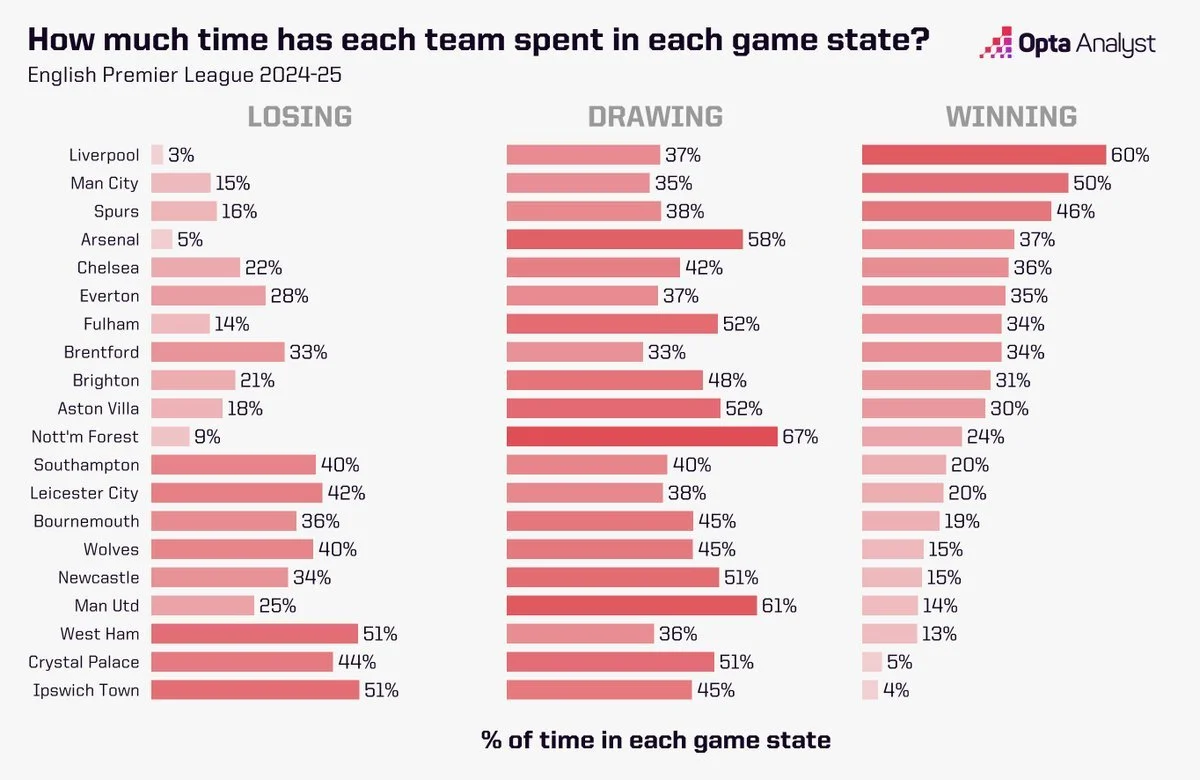
Game state, visualized. Credit: X/Opta Analyst
To put theory into practice, look at Manchester City. They often rack up huge attacking numbers early on, then slip into cruise control once they take the lead. On paper, their output seems to drop — but game state tells the real story.
So next time your team suddenly sits back after scoring — don’t panic. Recognise the game state, and plot your next move.
In sport, as in life: context is key.